
With smaller lots and closer neighbors, privacy fences have become essential. They create safe spaces for kids and pets, block unwanted views, reduce street noise, and boost curb appeal, sometimes increasing property value by 5–10%.
Beyond looks, fences clearly define property lines and deter trespassers. Planning your budget first helps you pick the best ideas for a privacy fence that fits your yard, style, and family needs. This balances function, privacy, and design in one smart solution.
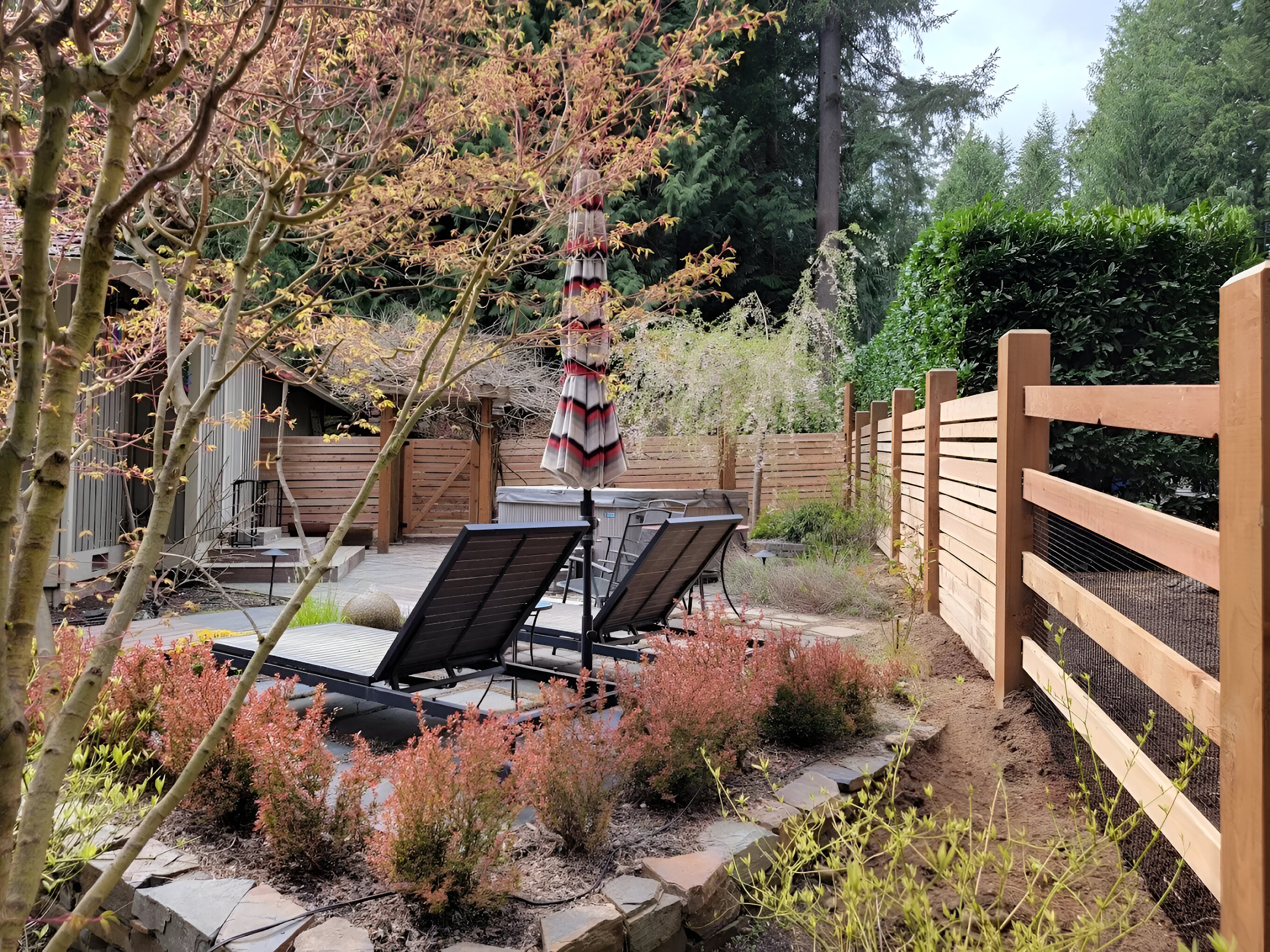
This section groups ideas by price range, from economical privacy fence ideas to mid-range and higher-end builds. The goal is to pair realistic budget levels with smart material and design choices that deliver privacy without wasting money.
Affordable fences can look intentional rather than temporary. A simple 6 ft cedar board-on-board or solid panel fence uses standard materials but still delivers clean, cohesive lines. Consider:
For tighter budgets or short-term solutions, consider:
Even low-cost fences require proper post installation and adherence to local codes. Retrofitting existing fences with slats or screens is often more affordable than full replacement.
Privacy fence ideas need to respect slopes, property lines, utilities, and landscaping. In narrow urban backyards common throughout Seattle neighborhoods, taller solid fences combined with vertical planting create private spaces that don’t feel closed in.
For sloped lots in areas like Bothell and Kirkland, stepped or racked fences follow the grade while keeping the top line smooth. This prevents water pooling and extends fence life.
Consider zoning your backyard: higher-privacy sections around patios, fire pits, and pools, with semi-private or decorative sections along less sensitive areas. Don’t forget gate planning; wide gates for boat or RV parking, double gates for mowing access, and pedestrian gates near driveways or side yards.
The right fence material depends on your budget, style, and maintenance tolerance. There’s no one-size-fits-all answer. Here’s a breakdown of common options for the Pacific Northwest: wood, vinyl, metal, and chain link.
We install all these fence types and can mix materials where that makes sense.
Wood privacy fences offer budget flexibility and customization. Common styles include:
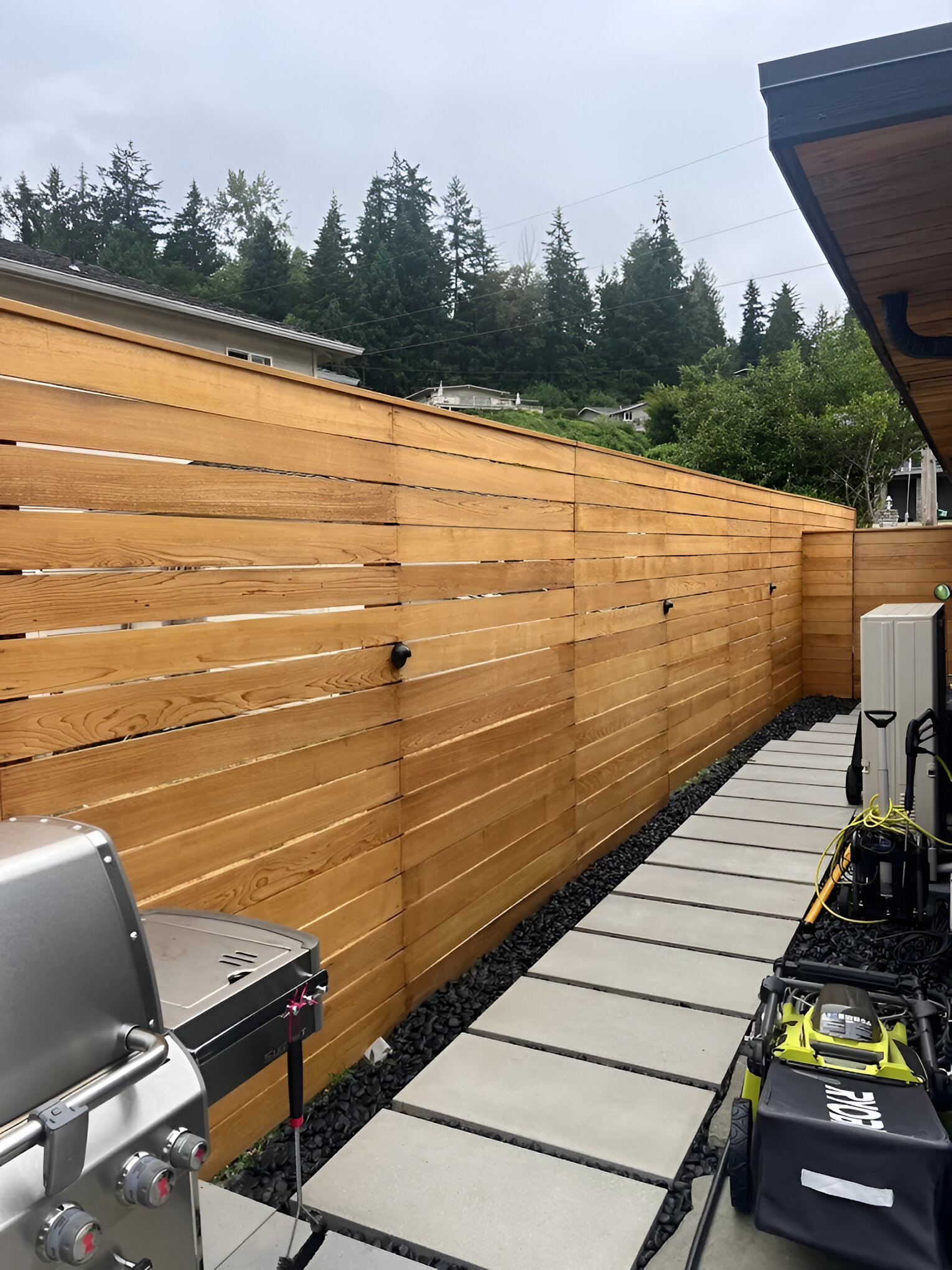
Cedar is a popular choice for wood fences due to its natural resistance to rot and insects, as well as its attractive appearance. Wood requires annual sealing or staining to prevent moisture damage.
Vinyl fences are ideal for busy homeowners as they deliver low maintenance without painting or staining. Options include:
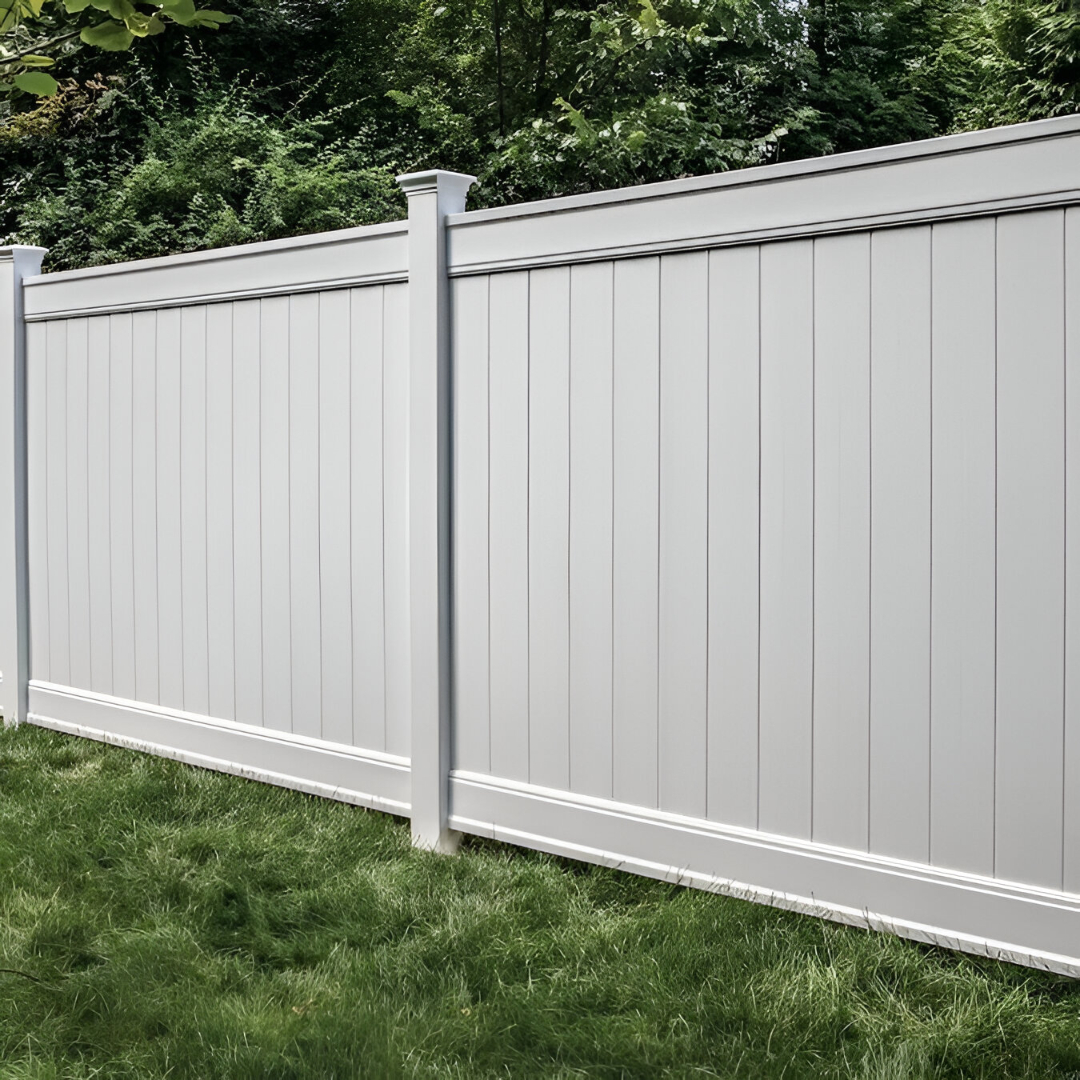
Vinyl resists rot, insects, and fading; manufacturer tests show less than 5% color fade over 20 years. Maintenance is minimal: occasional rinsing with a hose.
Metal fences include solid panels, metal frames with wood/composite infill, or ornamental designs.
Benefits of metal include:
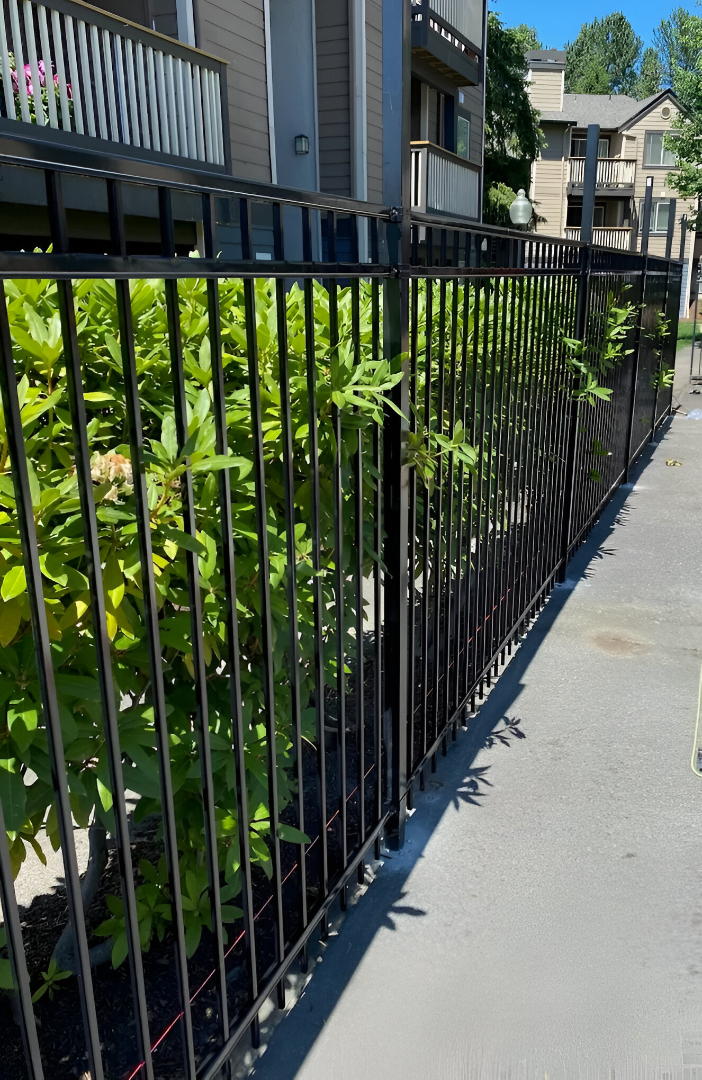
Metal has a higher upfront cost but delivers long-term strength and distinctive style, especially for front-facing fences or properties with a view.
Chain link isn’t private, but several ways can turn it into a privacy fence affordably:
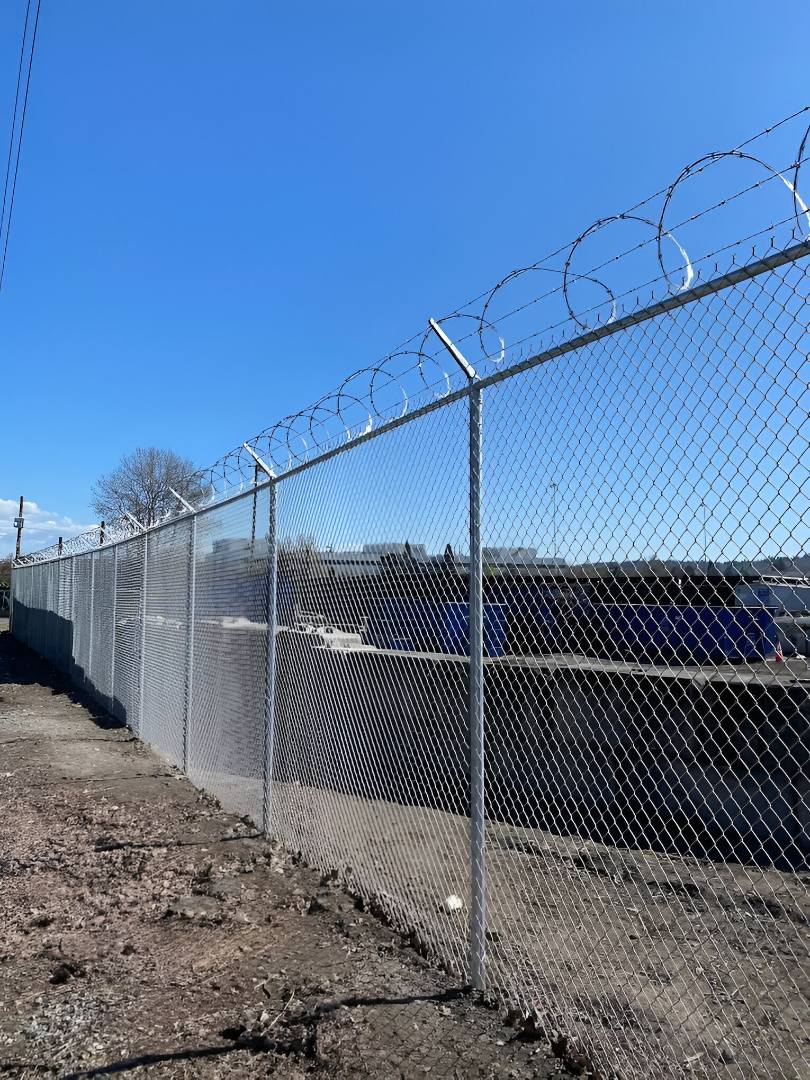
Retrofitting often makes more sense than full replacement, keeping costs lower while increasing privacy.
Once budget and materials are chosen, style decisions make the fence feel custom to the home and neighborhood. Think about how the fence looks from inside the yard, the street, and neighboring properties.
Horizontal privacy fences are popular for their modern, clean lines and connection with contemporary architecture. Options include:
Pairing horizontal cedar privacy fence with black metal posts creates a high-contrast, designer look that works well in newer neighborhoods. Proper framing and post spacing prevent sagging or warping. This style suits patios, courtyards, or front-yard privacy screens.
Consider design details that make your fence unique:
We design custom fences throughout the Greater Seattle area and adapt these ideas to local codes and lot conditions. Your garden and landscape design can integrate with your fence to enhance curb appeal.
Most backyards use a 6 ft fence for standard privacy; tall enough to block average eye levels of 5.5 feet while meeting 70% of U.S. municipal codes. Here’s how heights perform:
Local zoning and HOA rules may limit height in front yards or along certain property lines. We handle permitting and height verification as part of our service. Stepping heights or lattice toppers can fine-tune privacy while complying with rules.
Before committing, review this checklist:
This preparation prevents costly mistakes and ensures your fence serves your household long term.
Avoid these missteps to save money, frustration, and disputes:
Professional installers help you avoid pitfalls and deliver a fence that performs.
Choosing the right fence means balancing budget, materials, and maintenance while matching your home’s style and your family’s needs. Whether you prefer wood’s natural character, vinyl’s easy upkeep, or metal’s lasting strength, the right fence transforms your backyard into a functional, inviting space.
At Contour Fence, we guide homeowners across Seattle and nearby areas in making confident decisions for their property and goals. Contact us to explore your options and get professional advice for your fencing project.
The most affordable are chain link with privacy slats or fabric screens, costing about $15–30 per linear foot installed. Pressure-treated wood panels follow at $15–25 per foot. Long-term value depends on quality installation and maintenance.
Costs vary by lot size, terrain, materials, and labor. Contact Contour Fence for a free, site-specific quote.
Vinyl costs more upfront but requires minimal maintenance over 30+ years, no painting or sealing needed. Wood offers a warm, natural look and easier small repairs but demands regular upkeep. Choose vinyl for low maintenance and clean lines; wood for traditional aesthetics.
A well-built cedar fence lasts 15–25 years with proper sealing, drainage, and installation. Untreated cedar weathers to silver-gray over 5–10 years but remains durable.
Standard chain link is see-through, but adding vinyl slats or screens blocks 80–90% visibility, suitable for budget-conscious solutions.
Most are 6 ft tall; some areas allow 7–8 ft depending on local codes and HOA rules. Check regulations to ensure compliance.
Vinyl fences need the least upkeep, just occasional cleaning, and resist rot, insects, and moisture, ideal for “install and forget” homeowners.
Yes. Privacy can be enhanced by adding slats, fabric wraps, or trellises to existing fences, especially chain link, often avoiding full replacement. We assess and recommend the best approach for your needs.
.jpg)



.svg)
No commitment · On-site or virtual


.svg)


.jpg)