Deck railing is the detail most homeowners underestimate. It defines more of what a deck looks like from inside the house than the decking boards will.
Choosing between options comes down to a few key factors: upfront cost, regular maintenance, and how the material holds up to Pacific Northwest weather. Contour Fence installs aluminum, vinyl, and cedar railing across Greater Seattle, and this guide breaks down what each one costs and requires over time.
The three most common railing options for decks in our region are aluminum, vinyl, and cedar. Each performs differently once rain, temperature swings, and UV exposure enter the picture.
Several factors should drive your decision:
💡 Pro Tip: Walk your deck at the time of day you use it most. Morning coffee spots often benefit from unobstructed views, while evening spaces sometimes call for more privacy.
Aluminum railings are lightweight, durable, and rust resistant, which makes them one of the most popular deck railing options across Greater Seattle and the Portland metro.
Aluminum deck railing Seattle installations typically run $45 to $80 per linear foot installed. Aluminum consistently rates near the top for longevity among common railing materials, ahead of most wood and vinyl options.
A closer look at the pros, cons, longevity, and maintenance of powder-coated aluminum railing shows why this finish dominates the category.
Vinyl railings are virtually maintenance-free and weatherproof, holding up well against Seattle's rain without cracking or fading.
Vinyl deck railing Seattle and Greater Seattle installations generally cost $35 to $65 per linear foot, slightly less than aluminum. Vinyl is available in white and tan, and it pairs best with vinyl decking or lighter composite boards rather than heavier natural wood tones.
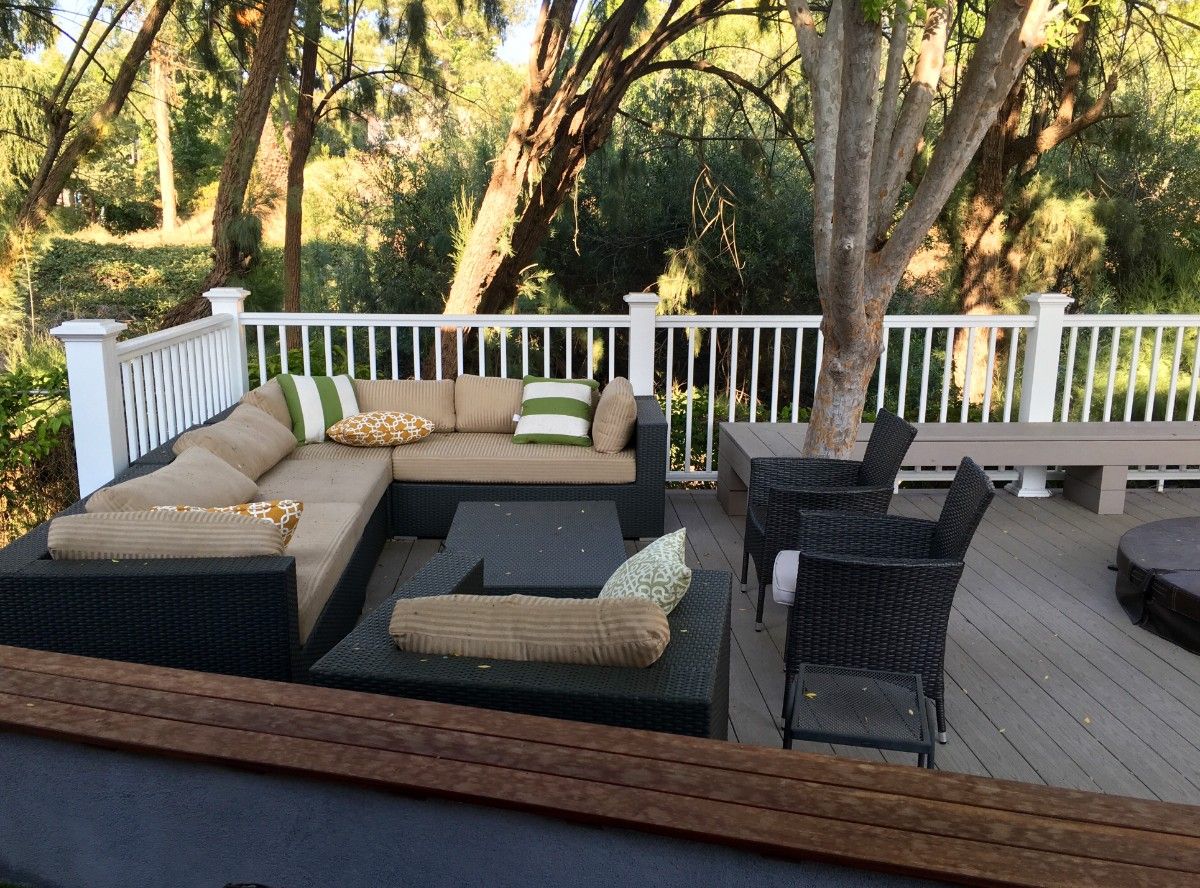
Cedar deck railing brings a warm, natural look that matches cedar decking perfectly, and it remains a classic choice throughout Kirkland.
Wood railings offer real character, but they require regular maintenance, the most upkeep of the three. Cedar deck railing Kirkland homeowners choose typically runs $30 to $55 per linear foot installed, the lowest material cost but the highest lifetime maintenance.
Among common deck rail options, pressure treated wood is the most affordable upfront but requires the most maintenance over time. That tradeoff is why so many homeowners eventually move toward aluminum or vinyl for lower overall cost across the deck's life.
Beyond the three core materials, a few specialty deck railing options show up often in Pacific Northwest projects, especially on view properties.
Cable railing maximizes views using thin stainless steel cables strung horizontally between posts. A cable railing system offers unobstructed views and a genuinely modern aesthetic, and costs commonly land around $90 to $120 per linear foot, though full cable deck railing systems can range from about $60 up to $500 per foot depending on post material and design.
Glass railing provides clear views while acting as a windbreak, which matters on exposed decks facing wind off the water. Glass panels carry a luxury aesthetic and a correspondingly high deck railing cost, generally $100 to $600 per linear foot installed, and require regular cleaning to keep that view looking sharp.
Composite railing combines plastic and wood fibers for durability, and it commonly lasts 25 to 30 years with minimal upkeep. It is a reasonable middle ground between the character of wood and the low maintenance of aluminum or vinyl.
Among the best composite decking railing options for 2026, trends lean toward darker, low-sheen finishes that pair with matching composite decking for a seamless look. Homeowners often choose composite to match an existing composite deck, which keeps it a popular pick for new builds.

Deck railing installation cost depends heavily on material, linear footage, and site access. Across all materials, cost per foot typically spans $20 to $600 installed, since wood, aluminum, cable, and glass sit at very different price points.
When comparing cheaper and more expensive options, cedar and vinyl sit at the affordable end, while glass and custom cable systems sit at the top. Most fall somewhere between those two extremes.
Labor generally runs $10 to $50 per foot, on top of material. A few things move that labor cost:
So what does railing actually cost on a typical residential project, or on deck stairs specifically? Most professional deck contractors say homeowners land in the middle of these ranges, and skipping a proper quote can lead to budget surprises. Comparing a few options side by side, with an actual quote in hand, is the only reliable way to know your real number.
DIY installation can save hundreds on the labor cost to install deck railing, and installation instructions come with each deck rail kit for straightforward installations. That said, improper installation is a common cause of later safety issues.
Professional installation ensures compliance with local code requirements, correct railing posts spacing, and proper load bearing capacity, which matters more than it seems until an inspector or a guest leans on the rail.
Here is generally how installing deck railing comes together from first call to final walkthrough.
If your railing project is part of a larger deck installation, the two are easiest to plan together from the start.
Your railing should either match your decking material or deliberately contrast it. Dark composite decking paired with black aluminum railings is a common contemporary Pacific Northwest combination, while cedar deck railing paired with matching cedar decking creates the warm, traditional look many homes throughout the region still favor.
Material choice across railing and decking should feel intentional, not accidental. A walk through Contour Fence's projects gallery shows how these pairings play out on real homes, which can help before you commit to a railing design.
Deck railing options ultimately come down to how much upkeep you want versus how much character you want.
Aluminum and vinyl both deliver low maintenance performance with strong durability, while cedar deck railing rewards regular care with a warmth composite and metal cannot match. Cable, glass, and composite railing round out the options for homeowners chasing a specific view or look.
Contour Fence installs all of these deck railing systems across Greater Seattle. If you are ready to talk through options for your own deck, reach out to Contour Fence for a clear estimate.
Cedar generally has the lowest material cost among cheap deck railing options, though it carries the highest long term maintenance. Vinyl and aluminum cost a bit more upfront but need far less upkeep.
Glass and cable rank among the most expensive deck railing options due to material and installation complexity. Custom framing and specialty hardware add to the total for these premium choices.
Cost to install railing on deck varies by material, linear footage, and site access.
Horizontal cable can create a climbing risk due to the ladder effect it forms between cables. Families with young children often choose vertical baluster railing options for decks instead.
Yes. Local code requirements typically address guard height, baluster spacing, and load capacity, varying by city and county. A professional installer confirms the specifics for your area.
.jpg)



.svg)
No commitment · On-site or virtual


.svg)

.jpg)