
Ornamental iron fencing does something no other fence material really achieves. It defines a property with presence and permanence while staying completely open, so you can still see through it, and it still looks like it belongs on an estate.
In neighborhoods like Mercer Island, Medina, and the waterfront pockets of Kirkland, an ornamental iron fence Seattle homeowners install is often the only fence style that actually matches the home. This guide breaks down the styles, the best uses, the maintenance reality, and the cost of installation so you can plan with confidence. If you are searching for front yard fencing ideas or a higher end property that stands apart, iron is one of the few materials built to match that ambition. Contour Fence works directly with homeowners across the region to help them choose the right look for their property.
An ornamental iron fence is a decorative metal fence built from vertical pickets, horizontal rails, and finished posts, styled to echo hand forged wrought iron. Most ornamental iron fencing today uses powder coated steel or aluminum instead of true wrought iron, keeping the classic look without the heavy upkeep older iron fences needed.
Contour Fence builds with Ameristar, a premium ornamental steel brand known for heavy-duty construction and durable powder-coated finishes, which is what gives these fences their strength and long warranty coverage.
Unlike a wood fence or a wall, an ornamental wrought iron fence style keeps sightlines open. That matters for security, for supervising kids and dogs in the yard, and for simply enjoying the view.
💡 Pro Tip: If you already have a driveway gate or plan to add one, choosing matching panels and an ornamental gate style at the same time keeps the whole property looking like one coordinated system instead of two mismatched projects.
Homeowners across Greater Seattle usually land on one of three finial styles. Each one changes the personality of the fence without changing how it performs.
Flat top panels use a horizontal top rail that sits flush with the tops of the pickets. There are no points and no rounded caps, just a clean, sleek line. This style works well with modern and transitional homes, and it is a popular choice in newer construction throughout Bellevue and other newer developments.
Spear top finials are the classic pointed top look most people picture when they hear "iron fence." Each picket ends in a decorative point, giving the fence an estate-quality feel that suits established waterfront neighborhoods with formal, traditional architecture.
Ball cap finials round off the top of each picket instead of pointing it. The rounded profile softens the fence's look while keeping the same durability underneath, and it pairs naturally with craftsman and colonial homes.
So which finial style actually fits your house? Match the fence to your home's existing trim and hardware. A craftsman home with black iron light fixtures usually looks best with ball cap or spear top finials, while newer, minimalist builds pair better with flat top panels. These three options cover most ornamental fence ideas homeowners bring to a consultation.
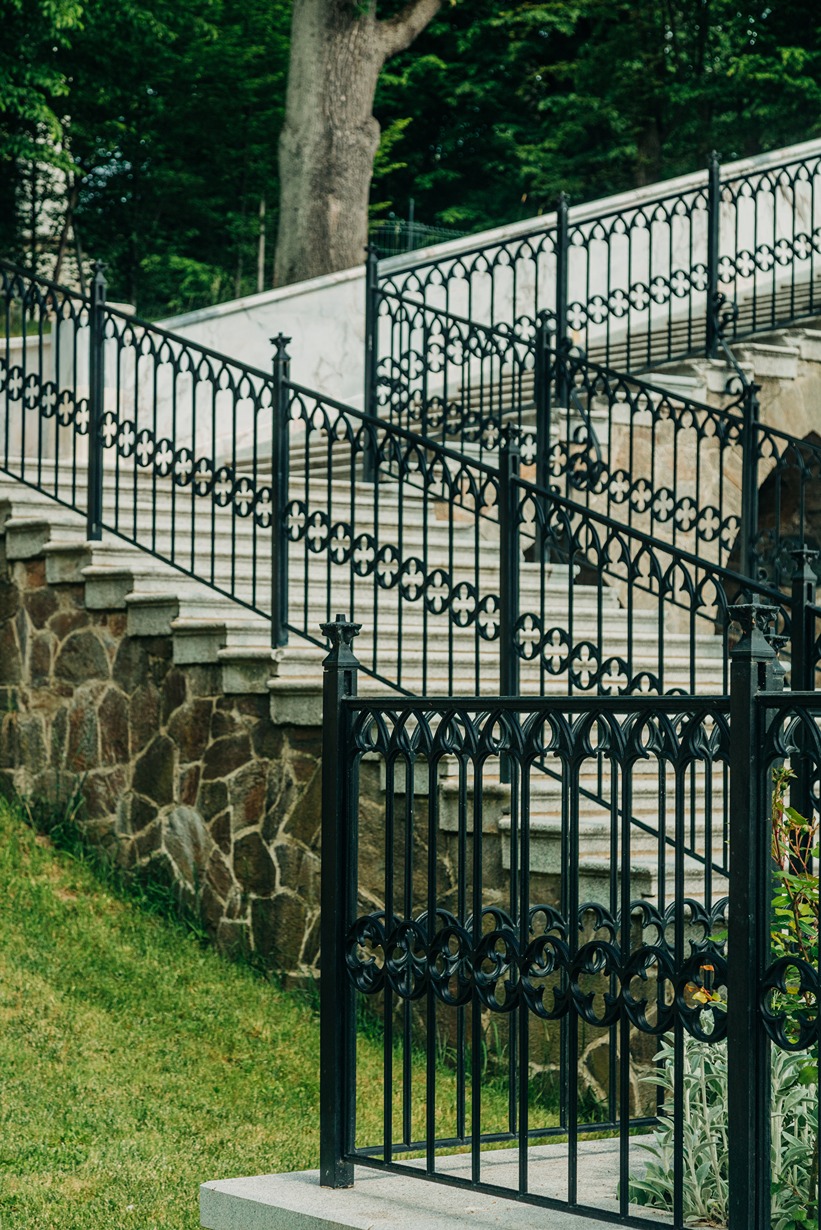
Both materials give the wrought iron ornamental fence look without true iron's maintenance, but they are not the same product.
Steel ornamental fencing is the stronger, more security-focused option, while aluminum is the lighter, more budget-conscious choice. Neither one rusts easily once properly coated, so the decision usually comes down to how much strength and security the property actually needs.
Ornamental iron fencing fits a wider range of uses than most homeowners expect. Here is where it earns its keep.
An ornamental iron fence across the front of a property defines the entry with maximum curb presence while staying completely open. There is no privacy here, but that is the point. It is a visual anchor that says the property is defined and cared for, without hiding the landscaping behind it. Among front yard fencing ideas, a wrought iron ornamental fence tends to hold up best against changing landscaping trends since the style itself rarely goes out of date.
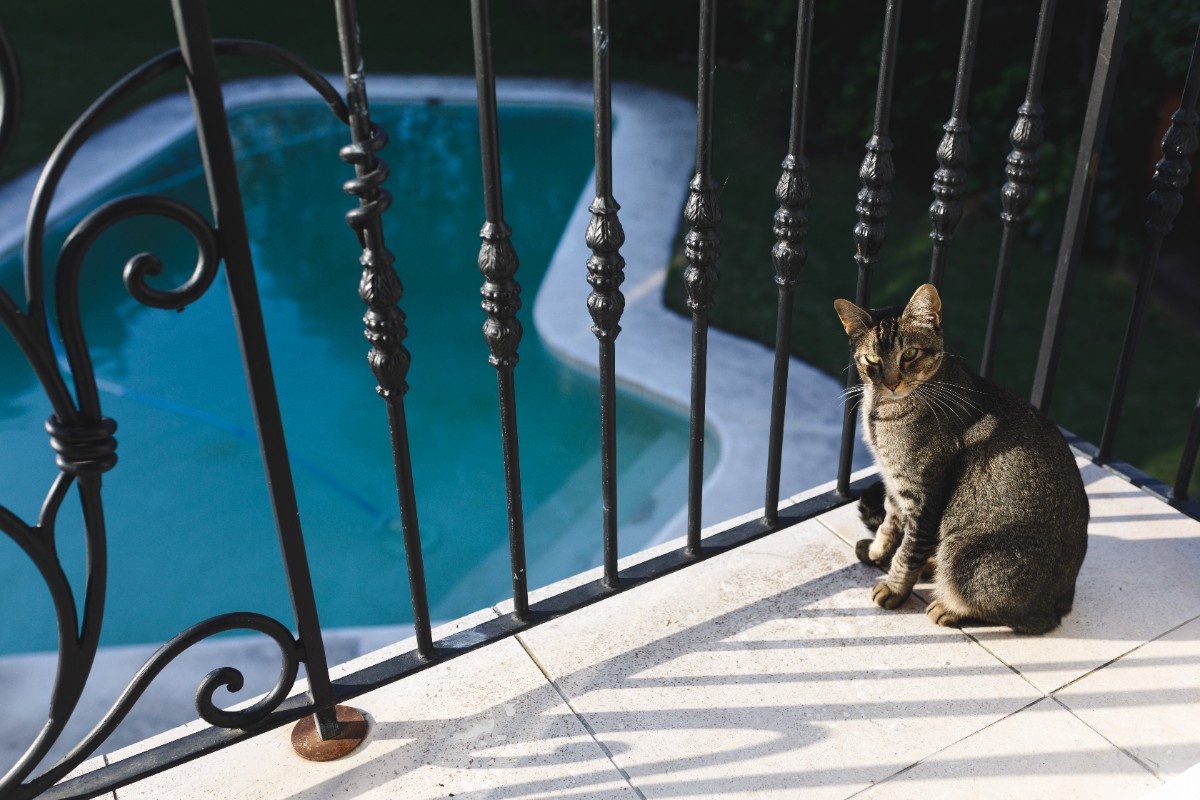
Ornamental iron fencing is a strong choice for pool enclosures because it maintains sightlines for supervision while still meeting the intent of most pool barrier codes. Both Washington and Oregon generally require pool barriers to be at least 48 inches tall, non-climbable, free of large gaps or footholds (no opening large enough to pass a 4-inch sphere), and fitted with self-closing, self-latching gates that swing away from the pool.
Exact requirements vary by city and county, so always confirm the specifics with your local building department before finalizing a design.
A powder coated iron or steel fence resists the moisture around a pool deck far better than untreated wood.
For commercial properties, heavy duty ornamental steel fencing integrates cleanly with keypad entry and card access control systems. It gives a business real security without the closed off, unwelcoming feel of chain link. A wrought iron ornamental fence in this setting reads as professional rather than fortified. That is exactly why the commercial fencing team specs ornamental iron for commercial perimeter security on office campuses and storefronts across the region.
Homeowners are often surprised at how straightforward installation is once the design is set. Here is the general process most ornamental iron fencing projects follow, before the cost of ornamental iron fence installation gets finalized.
💡 Pro Tip: Ask your installer for the exact lead time before you commit to a start date. Because panels are pre-fabricated off site, ordering early avoids any gap between finishing site prep and having the fence ready to install.
The cost of ornamental iron fence installation for a wrought iron ornamental fence depends on height, style, and gate requirements. In most cases, ornamental iron fence cost Seattle homeowners can expect runs between $85 and $150 per linear foot installed for premium powder-coated lines like Ameristar in the Seattle metro, with spear top and custom estate designs generally landing at the higher end of that range.
Gates typically add $600 to $2,500 or more installed, depending on width and whether you want an automated gate operator included.
These figures are general ranges. Your actual ornamental iron fence cost Seattle quote depends on property access, terrain, and the style you choose, so a walkthrough with a professional is the only way to get an accurate number.
Does an iron fence actually need much maintenance in a rainy climate like Seattle's? Not if it is properly coated. Powder coated ornamental iron requires almost no maintenance through Seattle's wet winters. A simple annual rinse keeps the finish looking sharp.
High quality finishes improve corrosion resistance, sealing the steel and helping prevent rust through months of Pacific Northwest rain. Unlike wood, iron is immune to rot and pest damage, so there is no splintering or warping to worry about.
Good iron fence maintenance is less about effort than consistency. A few quick habits worth keeping:
With this level of maintenance, wrought iron fences can last for decades. High quality ornamental iron fencing also carries strong manufacturer warranties, ranging from limited lifetime coverage on residential lines to twenty year coverage on heavier commercial grade products.
Whether you are working from front yard fencing ideas you found online or a custom sketch, avoid these common missteps before you finalize your ornamental fence ideas.
Contour Fence's completed projects page shows real examples of these style and layout decisions on actual Greater Seattle properties, a helpful reference before finalizing your own plan.
An ornamental iron fence Seattle homeowners choose adds real security and a classic, upscale appearance that few other materials can match. Whether you land on flat top panels, spear top finials, or ball cap finials, the fence enhances property value and curb appeal while keeping your yard, entry, or pool area fully visible. Contour Fence's fence installation team can walk you through style, layout, and pricing so the finished fence fits your property and your budget. When you are ready to talk through options, reach out to Contour Fence and start the conversation.
Yes. Ornamental iron fencing is a strong deterrent to intruders since it is difficult to climb, while still keeping sightlines open.
Iron is immune to rot and pests, unlike wood, and it holds up better against heavy winds thanks to its rigid metal construction.
Yes. It maintains visibility for supervision while meeting the intent of most pool barrier codes, though exact requirements vary by city and county.
Wrought iron fences can last for decades with proper maintenance and periodic coating checks. Properly coated iron resists moisture related deterioration even in wet climates.
Flat top panels have a clean horizontal rail, spear top finials end in a decorative point, and ball cap finials round off each picket. All three share the same core durability.
No. High quality finishes are largely maintenance free, generally needing just an occasional rinse and an occasional touch up if the coating gets scratched.
.jpg)



.svg)
No commitment · On-site or virtual


.svg)


.jpg)