Most patio cover advice online is written for places where "outdoor season" means dodging the sun. Here it is the opposite. From October through May we get steady drizzle, atmospheric rivers, and wind that drives rain sideways under anything half covered. A cover that shrugs off Arizona heat can leak, sag, or grow moss through one Puget Sound winter.
Get it right and the payoff is real: morning coffee in the rain, a dry grill in January, a patio you use year-round instead of four months. That is what sends most homeowners looking at patio cover ideas in the first place.
Nearly every choice comes down to three levers:
Once you know which of those three matters most, the different types of patio covers Pacific Northwest sort themselves out fast. Here is how the main options compare for a home in Bellevue, Kirkland, Bothell, or anywhere on the Eastside.
Here is the quick version before the detail. Each of these types of patio covers for the Pacific Northwest solves a different problem:
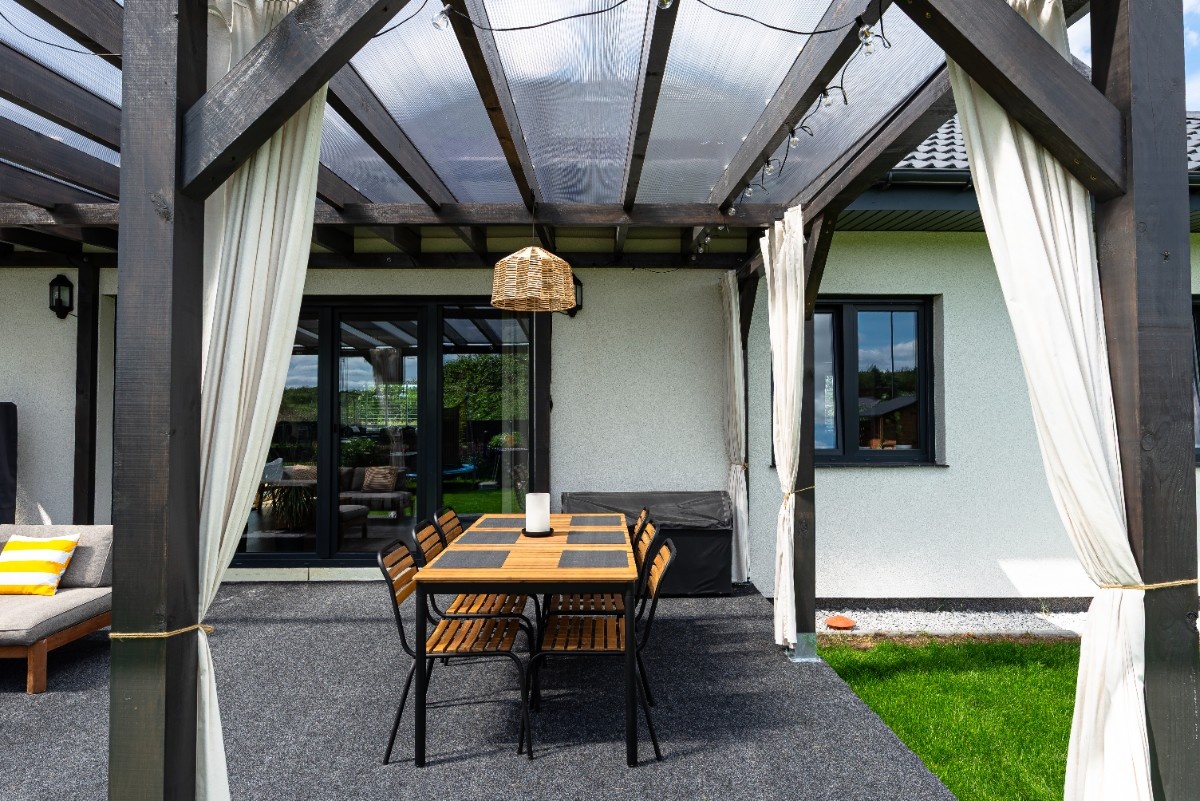
WeatherShield is a waterproof polycarbonate patio cover system that mounts onto a pergola frame. The panels seal out rain completely while letting daylight filter through, so you get a dry space that does not feel like a cave.
A few things that make it a strong fit for wet Seattle winters:
It is the pick for homeowners who want a genuine outdoor room that feels open and bright. If you love the airy feel of a pergola but are tired of it being useless the moment clouds roll in, this is the upgrade. See the full system on Contour's WeatherShield pergola cover page.
When you want a real roof overhead and the least possible upkeep, a Duralum aluminum patio cover is hard to beat. The solid panels deliver full shade and full weather protection, and the aluminum shrugs off everything our climate does to wood.
Why homeowners on the Eastside keep choosing it:
This is the set-and-forget option. It suits outdoor kitchens, shaded lounge areas, and anyone who would rather use the patio than maintain it. Both this and the next option live on Contour's aluminum patio cover page, since they share the same aluminum system.
Acrylite takes the opposite approach to Duralum. Instead of a solid roof, it uses translucent acrylic panels that keep rain and UV out while letting light pour through. If your worry is a cover making the yard or the rooms behind it feel dark, this solves it.
Where Acrylite earns its keep:
For a north-facing patio or a home already short on light, this is often the smartest of the aluminum-framed types of patio covers, coverage without trading away brightness.
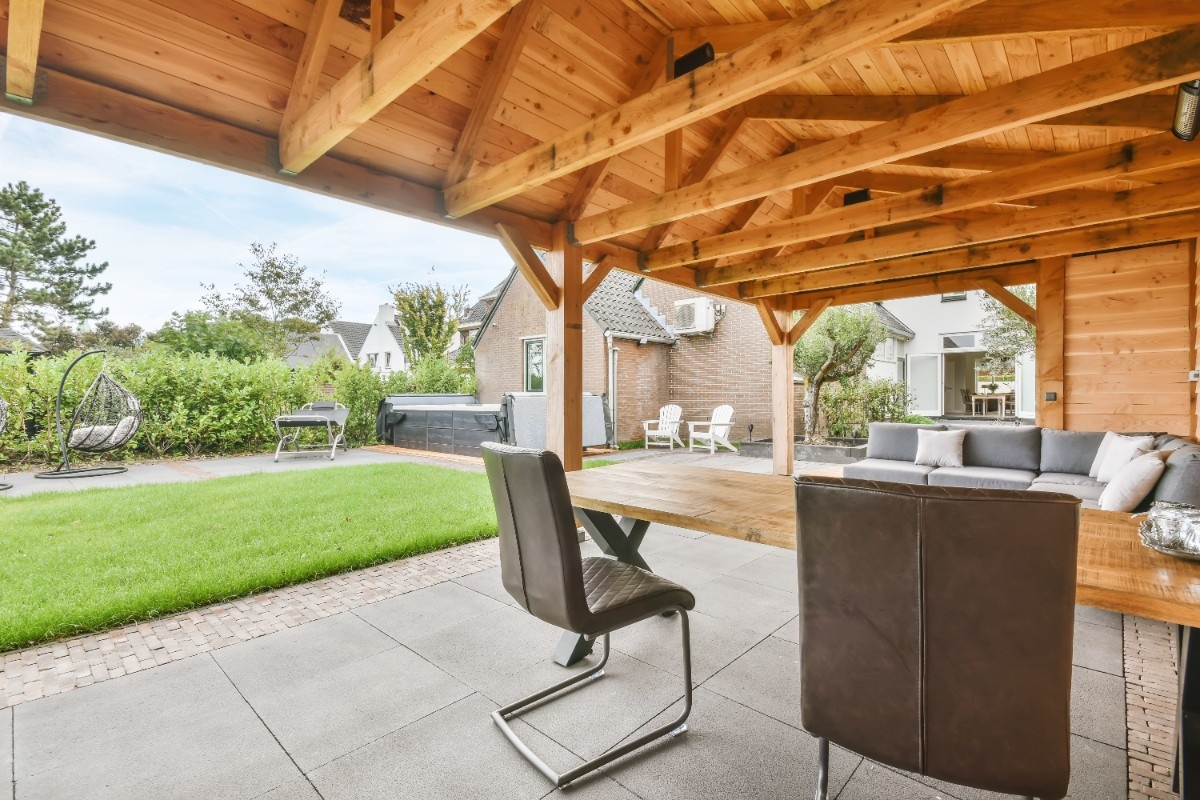
Not everyone wants metal or polycarbonate overhead. A wood-framed patio cover brings warmth and a classic look that ties into the Craftsman and Northwest-style homes all over Seattle. With a solid roof, it protects from rain and sun while feeling like a natural extension of the house.
What you are signing up for:
It is the right call for homeowners who care most about looks and do not mind the upkeep real wood demands, the same tradeoff you weigh with low-maintenance decking built for our rain. It belongs in any honest comparison of patio cover ideas, even though it asks more of you over time than the low-maintenance options above.
This trips up almost everyone shopping for a cover. A pergola on its own is not a full patio cover. An open or slatted pergola gives you partial shade and a break from light rain, but the gaps mean water gets through in any real Seattle downpour.
The difference is what sits on top:
So the pergola is the structure, and a cover like WeatherShield is what makes it usable in the rain. If you already have a bare pergola, you do not need to tear it out. Adding panels turns it into a dry, year-round room, one of the most common upgrades we see across King and Snohomish County.
Disclaimer: The information below is provided for general informational purposes only and does not constitute legal, regulatory, or code-compliance advice. Contour Fence is a fencing and outdoor-living contractor, not a permitting authority or legal advisor.
Building codes, permit thresholds, and local regulations can change and vary by jurisdiction. Before starting any patio cover or outdoor structure project, readers are responsible for confirming current requirements with the Seattle Department of Construction and Inspections (SDCI), or their local city or county building department if they live outside Seattle.
Short answer: for a patio cover, almost certainly yes. The common myth that small backyard projects are always exempt comes from rules about ground-level slabs and small open structures, not roofed covers attached to your house.
Here is the accurate picture for Seattle:
Skipping a required permit tends to surface at the worst time:
In Seattle, confirm with the Seattle Department of Construction and Inspections. Outside the city, your local King or Snohomish County jurisdiction sets its own thresholds. The simplest route: work with an installer who folds permitting into the job, so the paperwork is handled before the first post goes in.
No need to overthink this. Once you know your top priority, the decision is quick:
For most Seattle-area homeowners chasing a true year-round setup, a waterproof patio cover that still lets light through tends to win, which is why WeatherShield gets picked so often on the rainy side of the Cascades. But the best answer matches how you use the patio. A cook who lives at the grill wants solid Duralum shade; a gardener who hates a dark yard wants Acrylite. There is no single winner among the types of patio covers Pacific Northwest, only the right one for your backyard.
The right cover comes down to the same three things every time: how much rain protection you need, how much light you want, and how much upkeep you will take on. Get those right and a patio that sits empty from the first October rain to the Fourth of July becomes the part of the house you use most.
What makes the difference locally is building for our actual weather. Covers sized for King and Snohomish County rain, with proper drainage, real workmanship warranties, and permitting handled up front, are the ones performing ten winters from now. If a deck is on your list too, plan both together and pair a deck and cover as one clean project.
Contour Fence installs WeatherShield, Acrylite, and Duralum aluminum patio covers across the Greater Seattle area, and can walk you through which one fits your home, your light, and your budget. When you are ready, request a free estimate and get a real plan for your backyard.
Through a Puget Sound winter of steady rain and gray light, a fully waterproof cover is safest. WeatherShield is a popular choice because it seals out rain while letting natural light through, so the patio stays dry without feeling dark. If you want solid shade with almost no upkeep, Duralum aluminum is the other strong option.
Usually yes. Attaching a cover to your home changes the building envelope, which generally requires a permit in Seattle regardless of the cover's size. Ground-level slabs and small open structures can be exempt, but a roofed cover typically is not. Confirm with the Seattle Department of Construction and Inspections, or your local county office, before you build.
Often, yes. WeatherShield panels are designed to retrofit onto an existing pergola frame, turning an open structure that only handles light rain into a fully weatherproof space. An installer can check whether your current frame is sized and sound enough to carry the panels.
Both mount on an aluminum frame, but the panels differ. Acrylite uses translucent panels that let light through while blocking rain and UV, so the space stays bright. Duralum uses solid panels for full shade and complete weather protection. Choose Acrylite for light, Duralum for shade.
A patio cover provides solid overhead protection from rain and sun. A standard pergola has an open or slatted top that filters sunlight but does not keep out rain. Adding a cover system like WeatherShield to a pergola is what closes that gap and makes it usable in wet weather.
More than the aluminum options. Wood needs to be re-stained or resealed every few years to hold up against our moisture, and it should be checked periodically for rot or moss. Aluminum and polycarbonate covers, by contrast, usually need little more than occasional cleaning.
Aluminum covers like Duralum tend to offer the best mix of longevity and low maintenance. Aluminum resists rot, rust, warping, and pests, so upkeep is mostly just cleaning. Polycarbonate WeatherShield panels are also low-maintenance and built specifically for wet Northwest conditions.
Yes. Contour Fence installs WeatherShield, Acrylite, and Duralum aluminum patio covers for homeowners throughout the Greater Seattle area, including Bellevue, Kirkland, Bothell, Redmond, and surrounding King and Snohomish County communities. Reach out for a free estimate to talk through the right fit for your home.
.jpg)




.svg)
No commitment · On-site or virtual


.svg)

.jpg)